The best small business ideas for SRD beneficiaries start with a skill you already have and stock you can afford to lose. Services such as washing, cleaning or hair braiding need little money. Test demand first, and remember that business income can affect your monthly SRD result.
Contents (13 topics)
- Which business ideas need little money?
- How do you choose the right idea?
- How do you start with almost nothing?
- How do you price and track money?
- Do you need a permit or certificate?
- Do you need to register a company?
- Where can you find support?
- Will a business affect your SRD grant?
- Can you get the grant as a lump sum to start a business?
- What if the business is not working?
- Tips for running a very small business
- Frequently Asked Questions
- What to do next
Which business ideas need little money?
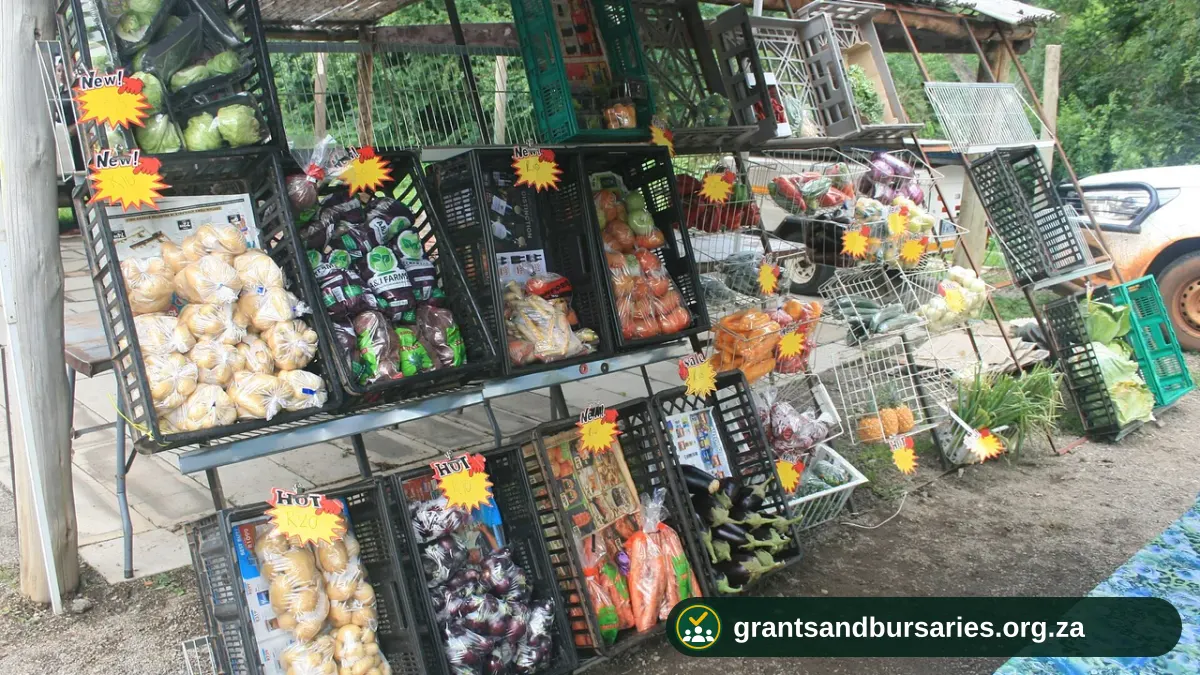
Services usually cost least because you sell your time and skill. Selling goods needs stock money and carries a risk of waste.
| Idea | Main things you need | Biggest risk |
|---|---|---|
| Washing and ironing | Soap, water, iron, electricity | Damaged clothing |
| House and yard cleaning | Basic tools, references | Irregular work |
| Hair braiding or barbering | Skill, combs or clippers | Hygiene and slow days |
| Vetkoek or cooked food | Ingredients, safe kitchen, permit checks | Spoiled stock |
| Fruit and vegetable stall | Stock, table, trading spot | Produce going off |
| Phone typing and form help | Phone or computer, data | Handling private details |
| Sewing repairs | Needles or a machine | Slow start |
| Collecting recyclables | Bags, transport to buyer | Low and changing prices |
| Seedlings and vegetables | Soil, seeds, water | Weather and water cost |
None of these guarantees income. Your street, your customers and your costs decide the result.
How do you choose the right idea?
Pick something people near you already pay for, and that you can do well. Walk your area and watch what sells.
Ask yourself four questions. What can you do now without training? Who will pay for it each week? What will one sale cost you? What happens if nobody buys today?
Then speak to ten possible customers. Ask what they buy, how often and what annoys them. Do not rely only on friends who want to be kind.
How do you start with almost nothing?
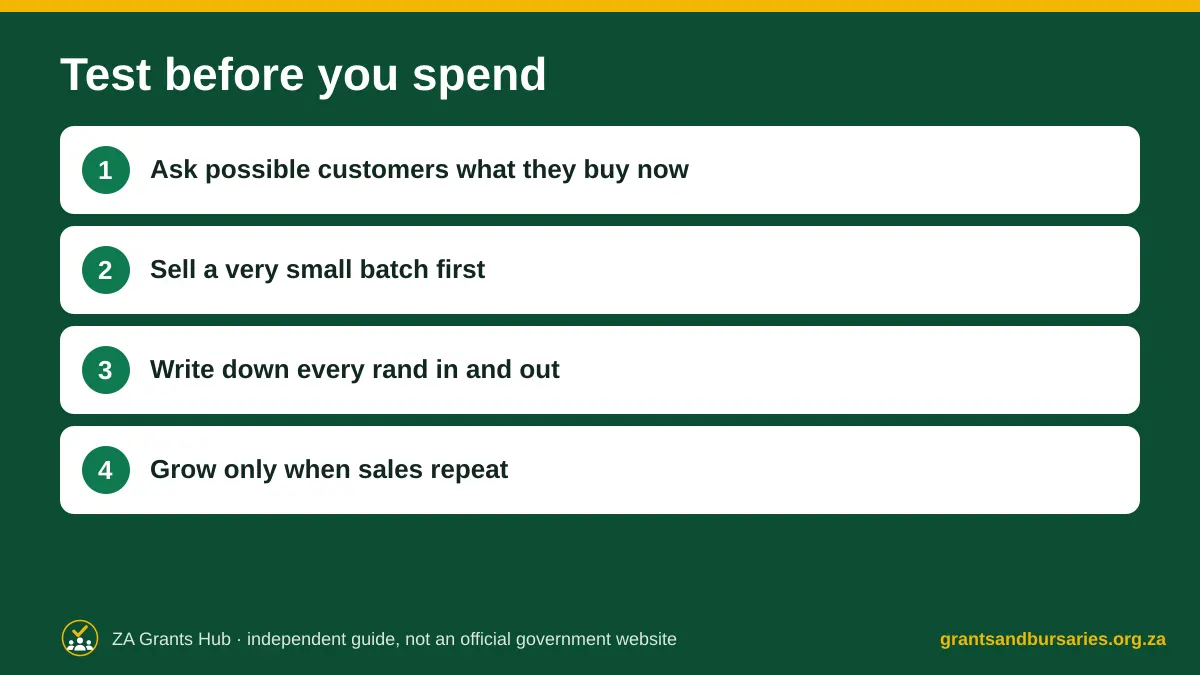
Start small enough that a failed week does not take your food money.
- Choose one product or service.
- List the cheapest items you need to deliver it once.
- Borrow or reuse equipment where you can do so safely.
- Set a price that covers materials, transport and your time.
- Offer it to a few customers.
- Record money in and money out the same day.
- After four weeks, keep, change or stop the idea.
Do not take an expensive loan to test an idea, and never use your bank card or SRD payment as security.
How do you price and track money?
Add up the cost of one item, then add your profit. If you only copy a neighbour's price, you may lose money.
| Example item | Amount |
|---|---|
| Ingredients for 20 vetkoek | R40 |
| Oil and gas share | R20 |
| Bags and napkins | R10 |
| Total cost | R70 |
| Sales: 20 at R6 | R120 |
| Left over before your time | R50 |
These figures are made up to show the sum. Check local prices yourself. If only ten sell, you take R60 and lose R10.
Keep a notebook with the date, sales, costs and money taken home. Keep business cash apart from household cash.
Do you need a permit or certificate?
Often you do, and the rules depend on your municipality. Ask before you buy stock.
- Street trading: Municipalities set their own permit rules and trading areas.
- Food: A certificate of acceptability from municipal environmental health may be required.
- Home business: Zoning or by-law limits can apply.
- Recycling and personal services: Ask about local rules and safety needs.
Cape Town, for example, issues informal trading permits and says only unemployed South African residents qualify. It also requires extra approval for selling meals. Your town may differ.
Do you need to register a company?
Not always for a very small start, but funders and larger clients often require registration. Compare the benefit with the duties.
The CIPC lists a fee of R125 to register a private company and R50 to reserve a name. Fees can change. A company also brings yearly filings and tax responsibilities.
Check CIPC and SARS information before paying an agent. You can do many steps yourself.
Where can you find support?
The Small Enterprise Development and Finance Agency, SEDFA, offers business support and finance. It replaced Seda and the Small Enterprise Finance Agency.
Its call centre is 086 010 3703 on weekdays. New funding applications go through its OneSEDFA platform. SEDFA lists a programme for informal, micro and small township and rural businesses.
Funding applications may ask for company registration, owners' IDs, bank statements, financial records, quotes and tax clearance. A brand new informal seller may not have these yet.
The National Youth Development Agency supports young entrepreneurs. Check its current age limits and programmes before applying. Being an SRD recipient does not give automatic access to any fund.
To build skills, try Free online courses or ask about Recognition of prior learning if you already have work experience.
Will a business affect your SRD grant?
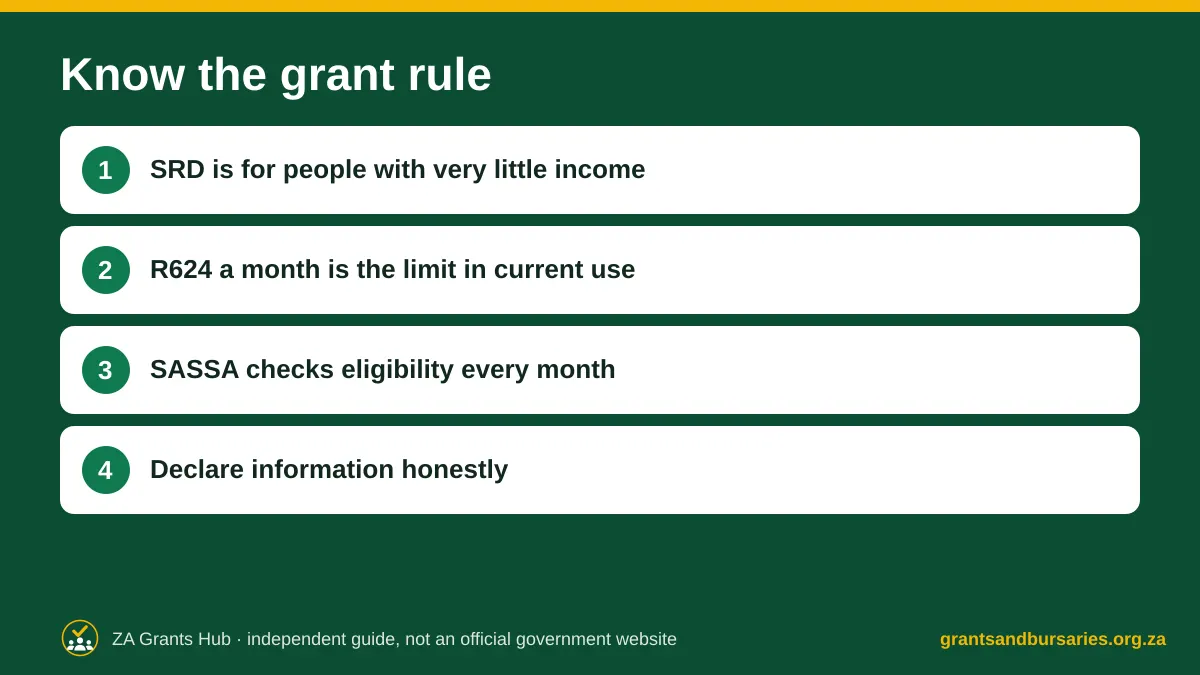
It can. The SRD is for people with insufficient means, and the income limit in current use is R624 a month.
SASSA checks eligibility month by month. Money paid into your account may be picked up in checks, including money you will spend on stock. A High Court ruling on the income rules is under appeal, so confirm the current position.
Give honest answers when applying. A month declined for income can be appealed if SASSA got your situation wrong. See How SRD income checks work and keep records that show the difference between takings and profit.
Check your result through the SRD status check. If a month is refused, read the Declined status reasons and the Appeal steps.
Can you get the grant as a lump sum to start a business?
We found no official option to swap monthly SRD payments for a start-up lump sum. Treat such offers as unconfirmed and likely unsafe.
Government has spoken about linking the grant to work and enterprise support. That is not a payment you can claim today. Our article on the SRD grant after March 2027 explains what has been announced.
What if the business is not working?
Stop and look at the figures before you add more money. A weak week is different from weak demand.
| Problem | Try this |
|---|---|
| Few buyers | Change place, time or product |
| Many credit sales | Ask for cash or a deposit |
| Stock goes bad | Buy smaller amounts more often |
| No profit | Recount costs and adjust price |
| Complaints | Fix quality before advertising |
It is fine to close an idea that loses money. Keep the lesson and the customer contacts.
Tips for running a very small business
- Start with one product. A short menu or service list reduces waste and confusion.
- Take deposits for orders. It protects your material money when a customer disappears.
- Limit credit. Write down every debt, and stop giving more to late payers.
- Pay yourself on a set day. This stops stock money slowly feeding the household.
- Use free advertising. Tell neighbours and post in local groups without paying for fake reach.
- Check proof of payment. Confirm money in your own account, not from a screenshot.
- Stay safe. Meet new customers in public and do not carry large amounts of cash.
- Keep food clean. Wash hands, cover food and store it at safe temperatures.
- Protect customer details. Delete ID copies after helping with a form, with the customer's agreement.
- Avoid joining fees. Schemes that earn mainly from recruiting people are a warning sign.
Frequently Asked Questions
Can I run a business and still get the SRD grant?
You may start a small business, but your income can affect eligibility. SASSA assesses SRD applications monthly and the current income limit is R624. Keep records and answer honestly. If your earnings rise above the rule, you may be declined for that month, even if the business is new.
What is the cheapest business to start?
A service using a skill and tools you already have is usually cheapest. Examples include cleaning yards, braiding hair or mending clothes. You avoid buying stock that can spoil. Still count transport, data, soap or electricity, because small costs can remove most of your profit.
Is there a government grant for SRD recipients to start a business?
We found no business grant given simply because you receive the SRD. SEDFA and youth agencies run support and funding with their own requirements. Apply directly and ask what documents they need. Do not pay anyone who claims to guarantee funding because of your SRD status.
Do I need a permit to sell food from home?
You may need a certificate of acceptability and other local approval. Rules are applied through municipalities, so contact your environmental health office before selling. Ask about your kitchen, water, storage and the type of food. Do this early, because an inspection may require changes before you can sell.
Do I need a bank account for the business?
You can start by keeping careful cash records, but a separate account or wallet makes tracking easier. Remember that deposits into accounts linked to you may be considered in income checks. Never let another person use your account to move their money, even for a fee.
How much money should I spend first?
Spend only what you can lose without going hungry or missing rent. Buy enough for a short test, not a full month. If customers come back and your figures show profit, use part of that profit to buy more. Avoid loans until sales are steady.
Can SEDFA help an unregistered business?
SEDFA says it has support aimed at informal and micro enterprises, but funding applications usually ask for registration and tax documents. Phone 086 010 3703 and explain your stage. Ask which advice or training you can access now and what you must prepare before applying for money.
Does business money count if I use it for stock?
Money received may show in checks even when most goes back into stock. We could not confirm a rule telling traders exactly how SASSA treats turnover for the SRD. Record sales and costs separately, declare truthfully and use the appeal process if you believe a decision is wrong.
How do I find customers without money for adverts?
Start with people who pass your home or stall, then ask satisfied buyers to tell others. Share clear prices in local WhatsApp groups where rules allow. Turn up at the same times each week. Reliability and clean work often matter more than a poster or logo.
What if someone offers a business kit for a fee?
Check carefully before paying. Ask who the company is, what you receive, who buys your product and whether you can get a refund. Be very cautious if profit depends on recruiting others or if a "government" offer asks for a joining fee, PIN or one-time code.
What to do next
Choose one idea, ask ten people nearby if they would pay for it, and run a very small test with a notebook for four weeks. Check your municipality's permit rules before selling food or trading on the street.
Sources
- SEDFA: services and how to apply
- CIPC: fees
- City of Cape Town: Informal trading
- SASSA on qualification criteria for COVID-19 SRD

About The Author
Sarah Johnson is an informational writer covering South African social assistance programmes, SASSA grants and public service updates.
Keep Reading